I am currently delving into a deeper understanding of the true meaning of the cross of Christ, how it relates to salvation and how it reveals God's heart.

Thursday, January 17, 2008

He Did Not Open His Mouth

He was oppressed and He was afflicted, Yet He did not open His mouth; Like a lamb that is led to slaughter, And like a sheep that is silent before its shearers, So He did not open His mouth.

(Isaiah 53:7)

As I opened my Bible to listen to whatever God wanted to share with me this morning I decided to read the chapter in Isaiah where I had some papers stuck into the Bible that needed arrangement. I decided to meditate and allow my heart to absorb whatever the Spirit had for me and to allow time for my own spirit to harmonize with the Spirit of heaven.

When I came to the above verse I noticed that it mentioned twice about Jesus not opening His mouth. This was clearly in reference to the intense time when He was undergoing the most shameful attacks on His body and spirit that could be invented by humans and demons. I used to think that Jesus simply kept His mouth shut and assumed that He did so to keep any potential anger or resentment stuffed inside so He could finish His perfect sacrifice for our redemption.

But with my new views of God that are taking shape in my mind I see that this kind of thinking is clearly faulty. There were possibly many good reasons why Jesus did not open His mouth under abuse but I don't think that it was because He was gritting His teeth and suppressing desires of anger and resentment in reaction to the treatment that He was receiving. That could easily describe the reaction that we might have in our distorted ideas of righteousness, but Jesus had very different motives and was dealing with a view of reality dramatically different than most of us ever perceive.

But another text came to my mind that I find interesting in this context. I do not know all the implications that it has in this setting, but I do see how the two texts can easily compliment each other when we find ourselves suffering under accusation, provocations or abuse.

But the things that proceed out of the mouth come from the heart, and those defile the man. (Matthew 15:18)

I am wondering if there is not a principle that is not real clear to me yet that is being described in these two passages. Could it be that there are times when it is crucially important to keep the mouth shut in spite of an intense desire to speak truth or establish justice when there clearly is none? I know this sounds like a rhetorical question but that is not my intention here. I am searching my mind and heart and trying to hear what may be something new that I need to be more aware of that I need in my own experience. (I know – there are plenty of people eager to tell me I need to keep my mouth shut more often) And I wonder how this relates to the advice in Proverbs? A gentle answer turns away wrath, But a harsh word stirs up anger. (Proverbs 15:1)

What I am wondering is, was it possible that if Jesus had spoken anything under those circumstances that it would have proven to be a defilement to His spirit? In those particular kinds of circumstances where all matter of defilement was being heaped on Him, or us, is there a law of the mind that we must stay in harmony with that requires total silence – for the right reasons – to maintain a right spirit? And one of the descriptions of a right spirit is called “a meek and quiet spirit”.

Clearly Jesus was not defiled by all the abuse heaped upon Him as was the intention of all the evil forces arrayed against Him. His body was certainly defiled and He did allow all the consequences of the defilement of the whole world to rest on His soul until it crushed out His life, but His spirit did not become defiled in such a way as to cause Him to relinquish the slightest amount of confiding (more like clinging) trust in His Father in heaven.

As I think back over times when I have chosen to keep silent, usually in response to urgent promptings by the Spirit of God, I have noticed that I have avoided a lot more trouble than what I was already receiving and I was often able to eventually see that what was really going on was very different than my first very strong assumptions. In fact, I am coming to believe more and more strongly that one of the most important things I need to learn in my Christian growth is to listen more carefully and consistently to the very quiet voice inside of me from the Spirit of God, particularly when I feel the strongest urges to react to what I perceive as an attack or threat on my value. And usually that prompting from the Spirit includes the request for me to remain silent and allow God to change my perspective of reality in that moment.

I find another very interesting clue in this passage that I believe adds an important ingredient to this mix. In verse 9 it says, Nor was there any deceit in His mouth. That reminds me of a verse in Revelation of the people of God in the last days who have a similar description.

These are the ones who follow the Lamb wherever He goes. These have been purchased from among men as first fruits to God and to the Lamb. And no lie was found in their mouth; they are blameless. (Revelation 14:4-5)

I sense that whatever shape this principle has, it involves the liability for me to become defiled with deception in my spirit and heart whenever I indulge in the temptation to blurt when I hurt. I am all too aware of my penchant for blame and counterattack and resistance when I feel threatened. And in those moments if I can just obey the quiet voice inside of me pleading with me to keep still and focus on what God has to reveal to me instead of opening my mouth, I find that the direction of my inner life in particular always takes a turn for something very important and valuable to emerge from the situation.

I am sure there is much more that could be explored here, but this is what I see so far.

Tuesday, January 15, 2008

Proving God's Will

And do not be conformed to this world, but be transformed by the renewing of your mind, so that you may prove what the will of God is, that which is good and acceptable and perfect.

(Romans 12:2)

I am under conviction this morning. After reading a devotional that told the story of someone attempting to give advice and comfort far beyond their own ability and the resulting pain they caused by that attempt, I sense that far too often I have written or spoken words that are not much better than that of Job's friends. I hope they are not that bad, but it is all too easy to let the left brain run on in its intellectual preponderances that feel so right at the time while not staying tuned to the right brain's level of awareness or listening to the gentle, quiet promptings or warnings of the Holy Spirit.

When I opened my Bible this morning and reread this verse those two words jumped out at me – so that...! Immediately I felt the conviction deepen that had been lurking in the background and I acknowledged it. I don't know exactly how to deal with it, especially relating to what has already happened. All I know to do right now is to say that if any of you reading this have felt the sting of my bluntness and insensitivity in anything I have said or written, please accept my deepest apologies. Yes, I am still growing and learning, but that does not nullify or excuse any pain that I have already caused. I simply have to take ownership of my problems as they are revealed to me and ask for more grace and sensitivity to better reflect the kind, gentle ways of my God.

What I see here is a clear warning to anyone who attempts to expostulate on what the will of God is without first having their own heart transformed and their own mind renewed with the true Spirit of gentleness. My mind takes me back to a Psalm that tells me something very important about my God. I looked it up and bring it to you here.

As for God, His way is blameless; The word of the LORD is tried;

He is a shield to all who take refuge in Him.

For who is God, but the LORD? And who is a rock, except our God,

The God who girds me with strength And makes my way blameless?

He makes my feet like hinds' feet, And sets me upon my high places.

He trains my hands for battle, So that my arms can bend a bow of bronze.

You have also given me the shield of Your salvation,

And Your right hand upholds me;

And Your gentleness makes me great.

(Psalms 18:30-35)

The word prove brings to my mind what I have been on the receiving end all too often from well-intentioned people who felt it their duty to impose their spin on spirituality and their strong opinions about doctrine onto me. It often took the form of carefully selected texts arranged in a certain order to produce the desired proof for some predetermined belief that they wanted me to adopt. Sometimes it was even required to have the texts taken only from the KJV so that the words would support their assumptions that could not be so easily proven from other, possibly more accurate versions. There is a whole sub-culture that has grown up around this practice that has become almost militant in defense of proving that only the KJV is accurate and all other translations are somehow satanically infected.

That kind of spirit itself is all too satanically infected in my opinion. In fact, the spirit of trying to prove something to start with is often very suspect unless under the strong influence of the gentle, Holy Spirit firmly in place in the heart of the proponent. And that is what I am seeing in this verse and the message for my own heart and mind today.

If I want to get into the business of proving what is good, what is acceptable to God, what perfection means and what the real will of God is, I am guaranteed to be likely off-balance and a threat to the hearts of others if I have not first made very certain that my own heart is alive, awake and sensitive in submission to the sweet influence of the still, small voice of God's Spirit. I am convicted that this is the needed experience of everyone who truly has a renewed mind and is experiencing the process of transformation as a result of that renewal.

Then he said to me, "This is the word of the LORD to Zerubbabel saying, 'Not by might nor by power, but by My Spirit,' says the LORD of hosts. (Zechariah 4:6)

Does that mean that this person – that I – will never again be out of balance and not cause any more damage to other hearts? I wish I could believe that were true, and I believe it could be possible if I were to always listen and stay in submission to that quiet voice. But realistically I suspect there is a great deal more growing to do in the area of submission and a lot more renewing and transformation that needs to take place before I am safe and free of potential danger to those around me.

I am comforted by the verse that comes to my mind from Romans 5:20. The Law came in so that the transgression would increase; but where sin increased, grace abounded all the more. The Law (when it is talking about God-type Law) is simply the description of reality, the principles which operate that I need to be in harmony with to thrive and be life-giving. When I am out of sync with how I was created to function I cause damage and pain and bring some form of death into people's lives and hearts. The good news is that I do not have to stay in this dysfunction because where sin abounds, God's grace to transform my life abounds all the more. I just need to receive more of that grace and allow it to slow through my writing, my words and even my appearance.

Lord, teach me and help me to know how to present my body as a living sacrifice to You today, holy and acceptable as my act of worship to You. Open my understanding to see how much I conform to the ways and thinking and attitudes of this world. Renew my mind in Your ways of thinking and relating and responding. Continue Your work of transformation in my heart especially and bring my mind and heart into proper balance today under the sweet influence of Your Spirit so that I may reveal more clearly what Your will is. I want my life to be a clear channel of communication for You to use to reveal Your attractiveness to the world, not my distorted opinions about religion. Thank-you for Your grace and I claim it in the authority of Jesus Who empowers me with Your Spirit. Reveal Your face in and through me today.

(next in series)

Sunday, January 13, 2008

Present Your Bodies

Therefore I urge you, brethren, by the mercies of God, to present your bodies a living and holy sacrifice, acceptable to God, which is your spiritual service of worship. And do not be conformed to this world, but be transformed by the renewing of your mind, so that you may prove what the will of God is, that which is good and acceptable and perfect. (Romans 12:1-2)

I am still grappling with what it really means to present my body.... I can't see that it would mean taking my physical body and somehow putting onto a physical altar or some other place to become some sort of sacrifice. But at the same time I also don't believe that it is so symbolic as to not involve my physical body at all. I realize there are plenty of people around who would be eager to offer emphatic answers to this question, but I need to mull it over myself and listen to what God wants to reveal to my own heart concerning this text and what His real desire is for my life.

I am struck with how much this reference to my body lies in the realm of the external when so much of Paul's message has been meant to shift my focus to the more important internals in contrast to the strong external orientation of false religion. Conformity is primarily an externally imposed system of religion that is not effective for a true relationship with God that is so necessary. But I hear Paul saying here that neither are the externals to be ignored or their effects on our life discounted more than what is necessary.

What I do see here is an instruction to release my grip over my life that is so easy for me to cling to and turn over my externals to the authority of God instead of trying to remain in control. It is recognizing the many ways in which I am resisting God at multiple levels in my life, both internal and external, both physically and spiritually. It is in following this path that I am able to reveal (prove) what the real will of God is for my life.

But what else does it mean to present my body as a living sacrifice? I'm not sure I am going to come up with a lot of answers alone. I have been thinking about some related issues to this since I woke up this morning and when I opened my Bible to see what God has for me today I found that He is continuing to address the same issue that I have already written about. What does it look like to let go of my resistance? How do I discover the good, acceptable and perfect will of God in my own life and go about living within that will?

Part of what He is telling me is that it will not happen alone. And part of it is a complete reworking and rewiring of my mind (primarily my left brain for part of this work) so that my mind and heart are allowed to function in proper proportion like they have never done up to this point. As my mind is renewed and my thinking is radically changed (much more than I can even yet imagine) I will experience more and more the transformation that is a natural result of this experience. In the process – or is it preceding this process – I need to do whatever this means – present my body as a living and holy sacrifice, acceptable to God.

I just noticed something as I wrote those words and looked again at the text. I don't know how significant it is, but the text does not seem to say that the sacrifice is offered necessarily to God. It just says that it is offered and that it is acceptable to God and that this action or decision is a spiritual service of real worship.

Does that imply that maybe my body might be offered in different ways or for various uses that would prove to be acceptable to God and be an act of spiritual worship? That certainly leaves a lot of room for thought and exploration. But whatever that means or what it might look like, it will be in the context of renewal of the mind and transformation as opposed to being conformed to a set of rules or to external pressures and expectations from around me, even if those are in an approved system of religion like a church.

Another element I see in this passage that likely relates to presenting my body is the warning in verse 3 to not think too highly of myself more than I ought. I am to have a healthy self-perception based solidly on the measure of faith that has been gifted to me by God. Even more significantly, in the following verses I have to come to perceive what it means to present my body as a sacrifice in light of the fact that I am just a small member with interactions that need to be made with the much larger body of Christ on earth. Included in that is my need to receive what I need to receive through that body as well as contribute. I need to find my part and function in the much bigger picture of God's master design for the assembling of all the parts of His body as it grows up into the full maturity of the Head.

Father, open my eyes, my heart and my mind to perceive whatever it is I need to perceive so that I will be a better fitting part of Your body. Help me to exercise the measure of faith that You have already alloted to me and teach me how to cooperate with You to strengthen and grow my faith in You. I want to be a more usable member in Your body than I am now and know much better what Your will is for me. Fill me with Your Spirit and cause me to walk in Your ways and think Your thoughts and share Your desires. Let me reflect Your glory and Your goodness today for Your reputation's sake.

(next in series)

Saturday, January 12, 2008

Measure of Faith

But I say to every one of you, through the grace given to me, not to have an over-high opinion of himself, but to have wise thoughts, as God has given to every one a measure of faith. (Romans 12:3 BBE)

Thinking higher of yourself is to buy into the Kingship/Economic modeling of the world. In God's family everyone is of equal value and no one is to lord it over anyone else. To think we are better and more valuable than someone else is to believe they are less valuable than us, and in doing so we are judging both them and ourselves. Judging is a high-risk activity (2:1-5) that always leads to problems and division and really is even abusive in nature. No matter how much evidence we can accumulate to justify our opinion, in comparing ourselves with others we are taking ourselves out of the will of God. We are no longer living in the renewal of our mind; we are no longer proving what the will of God is. We are in fact usurping God's place as judge and furthermore we are going about trying to establish our own righteousness (10:3).

The alternative for this faulty kind of thinking is to think moderately, reasonably, with correct perspective and wisdom about ourselves. That is not to say that we should think only negatively about ourselves and put ourselves down, mistaking shame for humility. Both elevating ourselves above others and denigrating ourselves compared to others are two sides of the same coin of pride. It is thinking within the world's system of value and distracts us from the truth that God wants us to live within.

So how do we go about thinking about ourselves differently than we are used to doing? How can we respond differently when we are attacked with assaults of shame or even flattery? How can we live in a world that only knows and operates within the comparative system and yet not fall under its spell?

I think the answer, as usual, needs to be found within the context and impressed into our hearts, not just our minds, by the Holy Spirit who is given to lead us into all truth. There are important elements surrounding this instruction that must be utilized to be able to live this kind of life.

First of all, right in the very same verse we can see that every person has been given a measure of faith. That is something that could be explored for a great deal of time and holds a lot potential for enlightenment. As I have been learning more and more about what real faith is I am embarrassed at the silly notions of faith that I was taught and assumed for most of my life. But to put it simply, I believe that real faith can only really grow to the extent and directly proportionally to the depth of relationship that I have my Creator.

Faith is not something that can be pumped up or inflated with intense emotional experiences. Faith is not increased by very intense intellectual determination to expel all conflicting ideas or emotions from my mind in order to somehow arrive at a purified, rarefied faith that will finally cause God to come through with what I want. In fact, I am coming to believe that faith cannot be increased by working on it directly at all. I might be wrong on this point, but right now that is how I perceive it.

When the disciples asked Jesus to increase their faith, Jesus did not plainly lay out a formula or a set of exercises for them to do to strengthen their “faith muscles”. (see Luke 17:1-10) When I studied this passage inductively for the first time I was amazed at what emerged from that study. What I saw was not a set of instructions explicitly addressing the disciples question but a description of a very close relationship of dependence, service and implicit trust within a tightly knit group of people. The assumptions held by the people in the parable said almost more than the more obvious activities displayed on the surface. Jesus laid out this story as a means of answering the disciples desire for more faith.

But the good news here in Romans is that absolutely everyone has already been given a piece of faith to start with. So it is a denial of reality for anyone to say they do not have any faith. Jesus pointed out on various occasions people who were faithless (had less faith) and even chided the disciples at different times for having so little faith, but everyone has a measure of faith from which to start. The real issue is what each one of us chooses to do with the faith that we already have been entrusted with.

There are various opinions about the idea of investing faith in order to grow it, much like investing money or seeds into the ground in order to get a larger return. There are elements within these arguments that lead us into false ideas about God and about faith, that is certainly true. At the same time, it seems clear that faith needs to grow and needs certain conditions or choices to stimulate that growth.

As I am thinking about it, it is coming to me that maybe the problems with the investment mentality is not the investment part of the model but the separation of the investing mentality from the importance of our relationship with the object of faith. When we start focusing on faith itself instead of the One worthy of trust, then we begin to put more faith in our faith instead of in a clearer knowledge, both intellectual and heart knowledge, of the real truth about God. This is the nature of a counterfeit and is very common.

Even in worldly circles there is a great deal of stock put in positive thinking, believing in yourself and mental success imaging; utilizing the imagination to create exciting scenarios of success until they become a reality. I am not denying that these kinds of techniques many times have powerful effects on our lives and can produce phenomenal results at times. But it is all to easy to get blinded by the “light” of what we assume is success and faith according to human perspective and thereby fail to see the real nature of true faith in the process.

But whatever true faith really is and looks like, it is a valuable assurance to know from this verse that each of us, somewhere in our hearts already have what we need to start out with. That we need to have much more faith is an understatement at best. But whatever it is, we already have been given the seed with the potential impregnated within it to grow into the mature faith that will secure us firmly to the very heart of the God who loves us and longs to share His life with us for eternity. And it is also true that this true seed can only really flourish and thrive as we choose to position ourselves more and more in the life-giving presence of that same God and surrender control of our lives to His Spirit to be renewed and transformed (transfigured) into His beauty.

(next in series)

Friday, January 11, 2008

Think More Highly

For through the grace given to me I say to everyone among you not to think more highly of himself than he ought to think; but to think so as to have sound judgment, as God has allotted to each a measure of faith. (Romans 12:3) (see context from 11:30 through 12:8)

This temptation to think highly of one's self was something Paul himself had to keep in check all of his life, it was a left over residual from the great pride and arrogance of his pre-conversion life as well as a temptation due to the great privileges he had received from God in his ministry.

The grace given to me links with verse 6 – gifts that differ according to the grace given to us.

Everything in this passage is in the context of proving what the will of God is.

This passage is an extended explanation of how the mind is renewed and transformed in contrast to conformity. It explains how to offer your body as a sacrifice in an act of worship. These are the greater concepts to be kept in view while looking through these various instructions. Otherwise they can easily become yet another list of do's and don'ts of performance religion which is precisely what Paul is trying to steer us away from.

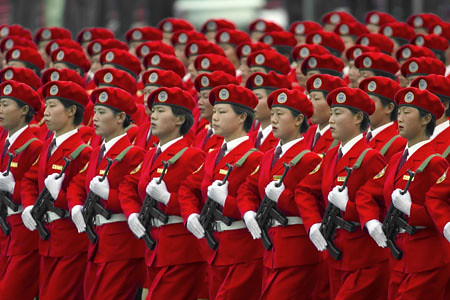
The world's way (and typical religion) to keep order and bring people together is through conformity – squeezing everyone into a similar mold. For obvious illustrations of this just look at a marching army, one of the typical symbols of worldly power. Each soldier is required to dress alike, cut their hair alike, move their body exactly the same in synchronization with every other soldier in lockstep. It presents a very impressive image of harmony and a sense of powerful identity. But it is very different than the analogy that God uses for His people.

God's idea of unity is that of a healthy body made up of all different limbs and organs and parts but working together in perfect sympathy and service to all the other parts. Each part of the body is valued and served and each part values and serves the rest of the body.

In the world's system every soldier looks like every other soldier – if you've seen one you've seen them all. But in God's body each individual is a unique part of the whole while different from every other part. They are not cookie-cutter clones multiplied many times to produce a sense of power but they are individuals gifted with a small portion God's immense grace, entrusted with unique gifts different from all the others but each one empowered with a measure of God's faith.

The primary bond and motivations found in an earthly army is fear and intimidation and pride. The motivation for healthy members of a body is love and selfless service for the rest of the body. This is all in the context of being shown mercy by God. Each member of the body has been classified as part of the group of disobedient ones so that God can equally show His mercy to all of them. Those who accept and embrace this mercy are enabled to become a functional part of the body of Christ. They have a tempered view of themselves in the light of God's mercy and are aware of the measure of faith given to them in His mercy. They are entrusted with unique gifts by His mercy and participate in loving, humble service to the rest of the body which unites them in joy bonds with each other.

Think so as to have sound judgment

The Greek here means to be moderate. This is in contrast to thinking arrogantly about one's self. Feeling that we are better than others is to forget that we all have been shut up in disobedience so that He may show mercy to all. When we keep in constant view our true condition before God then we will not so readily compare ourselves with each other. This is very important to keep in mind when observing the differences in our gifts.

The way the world sometimes deals with the problem of differences is to force everyone into a single mold like soldiers. This imposes external conformity but does nothing to deal with the pride or shame inside the heart. God's way to address the temptation of comparison and criticism is to remind us that we are all equally fallen in sin and in need of undeserved mercy. Our differing gifts are according to His grace, not according to our achievements or independence. This is very easy to say but very difficult to incorporate into our thinking. That is why Paul has to insert the warning to not think of ourselves more highly than we ought to think.

So where do we find the definition of what we ought to think about ourselves? In the surrounding context:

we were all disobedient,

we have all been shown mercy,

we each must give ourselves up as a sacrifice of worship to God,

we all need our minds renewed and transformed,

we all have received our measure of faith from God,

we all have received our differing gifts from outside ourselves to be used to serve others in the body.

All of our focus need to be on God instead of on our supposed naturally inherent or cultivated value.

It is God who has the riches of wisdom and knowledge,

it is God who is the past, the present and the future of all life,

it is God's perfect design of creation against which we have been disobedient,

it is God who has shown all of us mercy,

it is God who alone deserves our worship,

it is God who is the source of any faith that we possess,

it is God alone who can hold together the disparate parts of His body in perfect bonds of unity, love and joy,

it is God we should think more highly of than ourselves,

it is God who alone is worthy of all praise and worship.

(next in series)